
Blog
Metal grinding
This is how components are refined and functionally optimized
LMV BLOG – Lauingen October 16, 2025
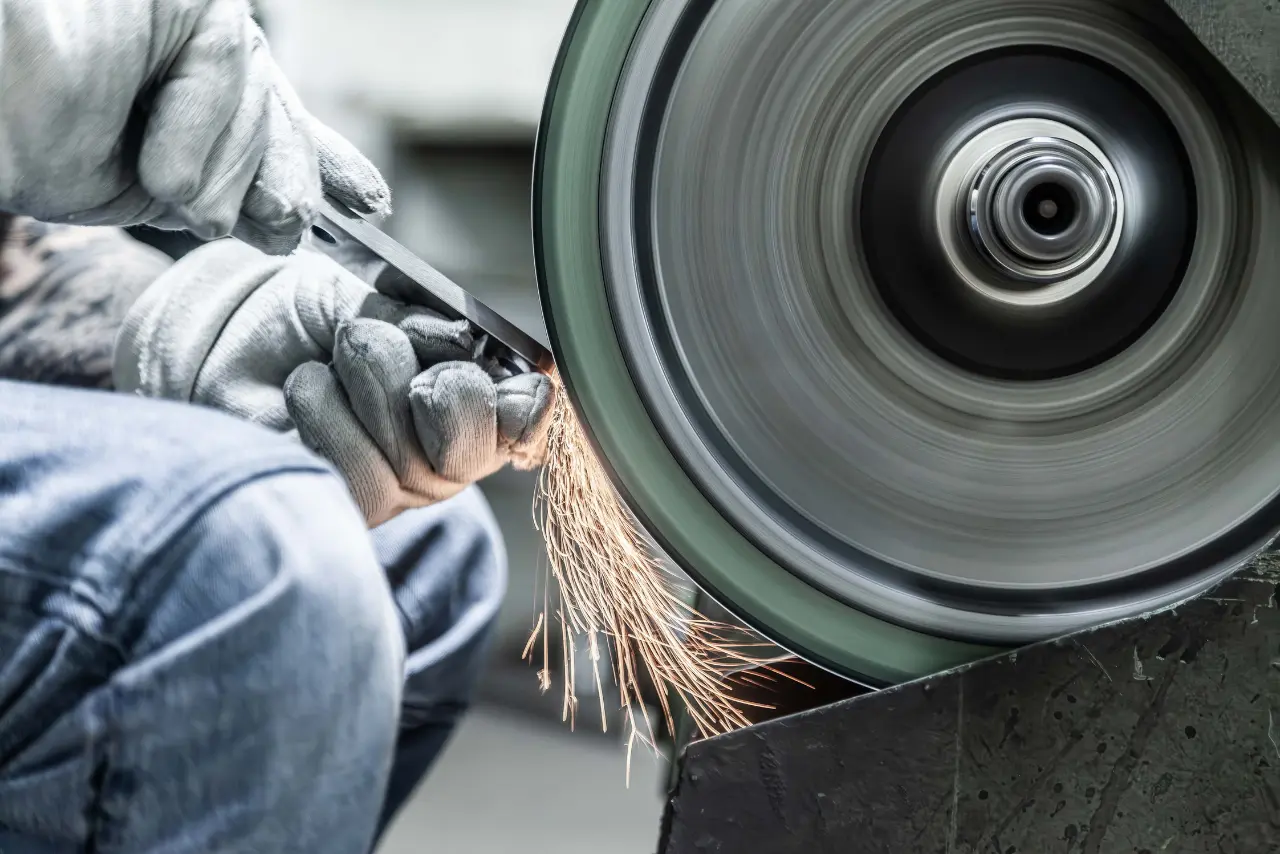
Metal grinding is one of the most crucial steps in modern metal processing. It determines the precision, quality, and appearance of the final product. Whether in mechanical engineering, industry, or design, ground metal surfaces ensure perfect fit, improved durability, and a high-quality appearance.
1. Key Facts at a Glance
-
Objective of grinding: Smoothing, shaping, and refining metal surfaces
-
Advantages: Higher precision, longer service life, better adhesion for coatings, improved appearance
-
Processes: Surface grinding, cylindrical grinding, belt grinding, fine grinding, deburring
-
Areas of application: Mechanical engineering, design parts, industrial components
-
Individual or in series: From prototypes to large series, LMV offers economical complete solutions from a single source.
2. Advantages and Importance of Metal Grinding in Manufacturing
Metal grinding is far more than just a fine finish. It ensures dimensional accuracy, functionality, and the desired surface finish. Precise grinding removes unevenness, precisely adjusts components, and refines surfaces.
The most Important Advantages at a Glance
- Optimal adhesion: Subsequent paint finishes, powder coatings, or electroplating adhere better to ground surfaces.
- Longer service life: Smooth surfaces reduce friction and wear.
- Better appearance: Uniform structures ensure high-quality visible surfaces.
Comparison: Grinding, Polishing, or Brushing
- Grinding: Material removal for shaping and dimensional accuracy.
- Polishing: Fine machining for mirror-smooth surfaces.
- Brushing: Texturing for matte, uniform surfaces, often used in design.
3. What happens before metal grinding?

Before a workpiece can be ground, careful preparation steps are necessary. These ensure not only the quality of the result but also the longevity of the abrasives and machines.
1. Cleaning and degreasing
Residues of oil, grease, or cooling lubricants must be removed so that the abrasive works evenly and no streaks or burn marks occur. A distinction is made between wet and dry grinding.
2. Coarse pre-processing
Often, the workpiece is first milled, sawn, or deburred to create the desired basic shape. Only then does grinding follow in order to achieve the surface quality.
3. Selection of Abrasive and Grit Size
Depending on the material and desired finish, LMV selects the appropriate abrasive belt or grinding wheel. Fine grit sizes ensure mirror-smooth surfaces, coarser ones ensure rapid removal.
4. What grinding processes are used in metalworking?
Depending on the material and requirements, different processes are used:
- Surface grinding: for flat components
- Cylindrical grinding: for rotationally symmetrical workpieces
- Belt grinding: efficient for larger surfaces
- Fine grinding and polishing: for particularly smooth surfaces
- Deburring and edge processing: for safe, clean edges
5. Practical examples from production
Design and Furniture Components with Visible Surface
For a regional manufacturer of furniture components, LMV manufactured brushed steel parts with a finely tuned ground finish. The visible metal surfaces should be both functional and aesthetically pleasing. With a uniform structure, pleasant feel, and modern look. This results in high-quality table and chair frames, frames, or support elements that perfectly combine design and stability.
Shopfitting and Interior Design
Grinding also plays an important role in shopfitting. LMV produces and refines metal components that are later used in shelving systems, counters, or wall structures. Precise belt grinding and deburring create smooth, safe surfaces. Ideal for visible applications with high design standards.
Request a non-binding consultation.
6. Professional and Reliable Metal Grinding
Those who wish to have metal polished will benefit from LMV Metalltechnik as an experienced partner who carries out all steps in-house. From preparation to finishing.
Thanks to modern machinery, trained specialists, and precise quality controls, LMV offers consistently high surface quality. This applies whether it’s individual pieces, prototypes, or series production.
This saves time, reduces rejects, and guarantees industrial-level results.
7. Frequently Asked Questions on Metal Grinding
1. How quickly can a grinding order be implemented?
This depends on the material and quantity. As a rule, orders at LMV Metalltechnik can be processed within a few days.
2. Which materials can be ground?
Stainless steel, aluminum, steel, copper, brass, and other metals. The decisive factors are the appropriate abrasive and the experience of the operator.
3. When is professional grinding worthwhile?
Always when a high-quality appearance is important, for example before coating or for visible parts in product design.
4. How does grinding differ from polishing?
Grinding removes material, while polishing compacts and smooths the surface. Both processes complement each other perfectly for high-quality results.
8. Professional and Reliable Metal Grinding
Whether functional, decorative, or technically sophisticated – grinding is crucial for the quality and durability of metal products. LMV Metalltechnik combines state-of-the-art machinery with many years of experience and craftsmanship precision. This results in ground surfaces that meet the highest requirements in industry, trade, and design.